Guest writer: Nina Sumner
Everything you wanted to know about welding but were afraid to ask
Anyone can dive into basic mechanical tasks with a decent toolkit, a workshop manual and a sense of adventure. But there is one area of car repairs that strikes fear into every classic car owner, especially those just starting out. Old cars rust for fun, and welding is a specialist skill that you might think is best left to the professionals. But doing so can easily push the costs into the stratosphere, and might quickly lead you to question the economic viability of keeping your classic alive.
I’ve been messing around with old cars since the dinosaurs roamed free. I remember my first attempt at welding as a teenager, using a second hand MIG welder that was probably older than me. It just seemed impossible and I was so disheartened, it was almost 20 years before I tried again! Modern welders, however, are far more user-friendly and are made with hobbyists in mind. The best way to learn is to give it a try, but before you do so, I thought I’d answer some of the questions that had me flummoxed for years but I was always afraid to ask.
MIG is the place to start
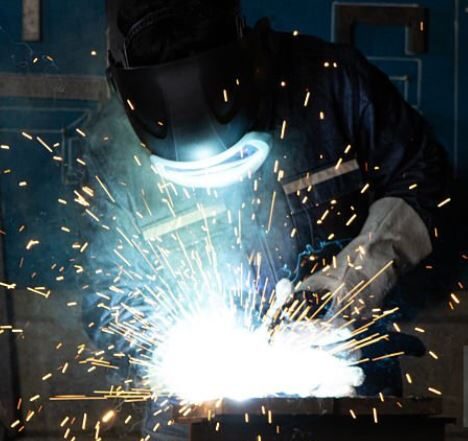
People talk about arc welding, MIG welding and TIG welding, and you’re just expected to know what they mean…. So here’s the scoop. The most common type of welding in classic car circles is MIG welding. It’s also generally considered the easiest welding to start with and learn your basic technique. MIG stands for Metal Inert Gas and a MIG welder automatically feeds a wire welding electrode on a spool at a constant pre-selected speed. Electrical current creates an arc between the base metal and the wire, which melts the wire and joins it with the base.
Most MIG welders use a mild steel wire, but you can also use stainless steel or even Titanium wire for specialist and racing applications. They also use a shielding gas, typically Argon, which acts like a protective bubble around the weld area to prevent atmospheric gases from mixing with the molten metal and weakening the weld.
Today’s MIG welders are far easier to use than they used to be. So if, like me, you were put off years ago by some scary box of tricks with mysterious dials, give it a try. MIG is also quite versatile in as much as it can be used on different thicknesses of metal, from sheet metal for bodywork to heavy-duty jobs such as chassis rails or spring hangers.
Other types of welding
Now, one of the things that sometimes puts people off MIG welding is messing around with gas cylinders. Even if they only contain Argon, they still need to be treated with caution. Flux-cored arc welding (FCAW) is a good alternative that is conceptually similar to MIG welding but does not require shielding gas. Instead, the flux releases its own shielding gas when it melts. As well as saving you the hassle of gas, FCAW is more forgiving on old rusty metal. However, it leaves more splatter and is not so good for delicate work such as body panels.
You might also hear people talking about TIG welding. This stands for Tungsten Inert Gas. It uses a non-consumable tungsten electrode to produce the welding arc instead of wire, along with Argon shielding gas. TIG welding basically melts the metal surfaces you are working with and bonds them together. It produces extremely strong bonds, but is harder to master than MIG welding and it takes a lot longer.
Give it a go
The seasoned pros that we love watching on TV and video streams typically have two or three welders and turn to whichever one is best for a particular job. Well, I say good for them. But for us regular folks who just want to have a go at welding on a new sill or a repair panel in the footwell, a couple of hundred pounds will buy you a simple and user-friendly MIG welder.
Obviously it takes practice and your first welds will be as ugly as anything. But play around using scraps of metal first and you will soon get the hang of it. Finally, a couple of words to the wise from one who has been there and done it.
First, preparation is key. You can’t weld to rust, so make sure you cut back all the corrosion and give yourself something solid to weld to. Secondly, dress appropriately. That doesn’t just mean wearing welding gloves and a visor. Also, long sleeves and long trousers are a must. Even when you have graduated from novice to amateur, welding sparks will spit back at you, and they have an uncanny ability to get inside your socks. Trust me, I know.
But getting work done on your classic is worth a few welding spark burns. Just like the skinned knuckles and blackened thumbnails, they are part and parcel of our hobby. So dive on in and give it a go – it’s really not as scary as you think.
Nina Sumner is our guest writer.
Nina blends her teaching expertise and journalistic savvy to craft stories that resonate deeply and educate effectively. With a career that spans the dynamics of classrooms and the buzz of newsrooms, she brings authenticity and a rich understanding to her writing. Guiding young writers and engaging readers, Nina’s approach is hands-on and heart-led. Her work embodies the convergence of knowledge and narrative, proving that with the right mix of curiosity and compassion, words can truly make a world of difference.
Do you have relevant content that aligns with our love for classics, do you want to reach the fastest growing classic community online? If so please get in contact with your articles, videos, or other forms of content as we are committed to promoting and celebrating the skills of all enthusiasts on our platform. Just drop us a mail: team@evoke-classics.com and we’ll be in touch.